


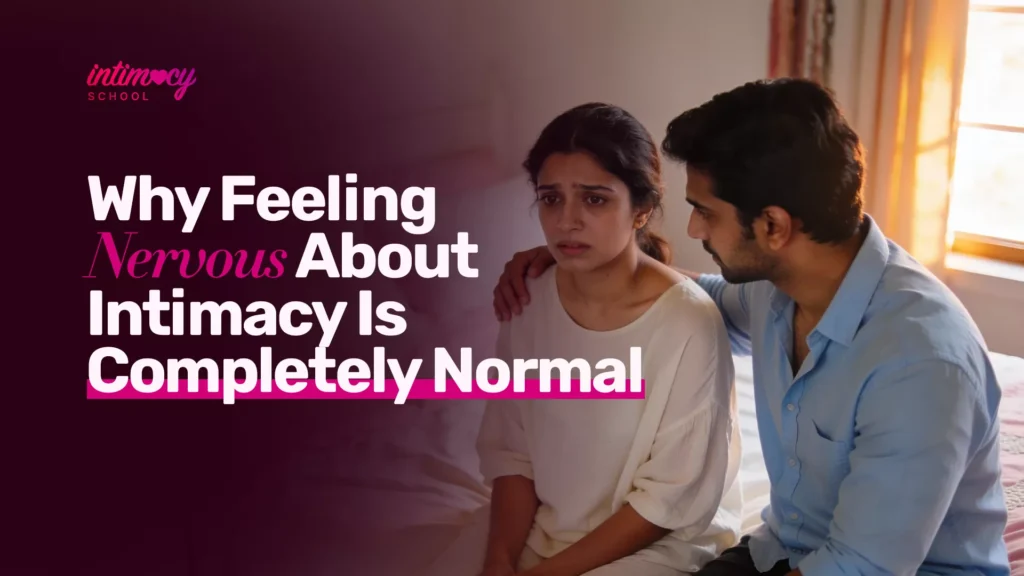
Feeling nervous about intimacy is more common than you think — and there are real reasons why it happens. Here’s everything you need to know about intimacy anxiety and how to actually overcome it.
Feeling nervous about intimacy is completely normal and happens to most people regardless of age, experience, or relationship type. Nervousness comes from performance pressure, fear of vulnerability, cultural conditioning, past experiences, and natural uncertainty about pleasing your partner. These feelings don’t mean something is wrong with you or your relationship. Most people find that nervousness decreases significantly within 3-4 intimate experiences as familiarity and trust build naturally.
Introduction
Your heart races before intimacy. Your mind fills with worries about performance, appearance, or whether you’re doing things right. You wonder if everyone else feels this confident and natural while you’re secretly terrified.
Here’s what nobody tells you: almost everyone feels nervous about intimacy at some point. First timers, experienced people, newlyweds, long-term couples trying something new — nervousness doesn’t discriminate. The difference is that most people assume they’re the only ones feeling it.
This guide explains exactly why intimacy nervousness happens, why it’s completely normal, and what actually helps reduce it. Understanding your anxiety is the first step to moving through it.
Is Nervousness before intimacy normal?
Intimacy is one of the most vulnerable human experiences. You’re physically exposed, emotionally open, and hoping to connect meaningfully with another person while simultaneously worrying about whether you’re doing everything right. That’s an enormous amount of psychological weight for any moment to carry.
The nervousness you feel isn’t weakness or abnormality — it’s your brain correctly identifying that something important is happening. Vulnerability always creates some level of anxiety because the stakes feel real.
Cultural conditioning intensifies this natural nervousness for Indian couples specifically. Most Indian families don’t discuss intimacy openly. Schools provide biological education without emotional preparation. Society simultaneously sexualizes everything and shames actual sexual experience. This creates adults who are supposed to suddenly know how to be intimate without ever having learned anything about it.
The result is almost universal intimacy anxiety among Indian couples, especially during first experiences, new relationship phases, and transitions like marriage. Understanding this context normalizes what you’re feeling instead of treating it as personal failure.
Why do people feel nervous before intimacy
Performance pressure
The fear of not being good enough in bed affects both men and women, though differently. Men worry about stamina, size, and technique. Women worry about whether they’re attractive enough, responsive enough, or pleasing their partner adequately.
This performance anxiety is self-reinforcing. You worry about performing well, which creates stress, which actually makes performance worse, which confirms your fears, which creates more anxiety next time. Breaking this cycle requires understanding that intimacy isn’t a performance — it’s a shared experience.
Fear of vulnerability
Being physically naked with another person is intensely vulnerable. Being emotionally open during intimacy is even more so. Your body, your responses, your sounds, your desires — all of it is exposed. For people who struggle with vulnerability generally, intimacy amplifies that discomfort significantly.
Cultural shame and conditioning
Growing up in environments where sexuality was never discussed, treated as shameful, or presented as something good people don’t think about creates deep-seated anxiety around intimacy. You can intellectually understand that intimacy is healthy and normal while still feeling unconscious shame from years of cultural conditioning.
This is particularly relevant for Indian couples navigating the gap between conservative upbringing and adult intimate relationships. The shame isn’t your fault — it was taught. But understanding its source helps you work through it consciously.
Body image concerns
Worrying about how your body looks during intimacy — whether you’re attractive enough, whether your partner is judging your appearance — creates significant anxiety. These concerns are extremely common and affect both men and women regardless of actual appearance.
Past negative experiences
Previous painful, embarrassing, or traumatic intimate experiences create anticipatory anxiety for future ones. Your brain learns from past experiences and tries to protect you from repeating painful moments, even when current circumstances are completely different.
New relationship uncertainty
Not knowing your partner’s preferences, responses, or expectations creates natural nervousness. You’re navigating unfamiliar territory with someone you’re still learning. This uncertainty is normal and reduces as you build familiarity together.
Why nervousness before sex is actually okay
It means the relationship matters to you
You don’t feel nervous about things that don’t matter. Intimacy anxiety often reflects genuine care about your partner’s experience and your connection with them. That’s not a problem — that’s investment in your relationship.
Moderate nervousness improves performance
Psychological research shows that moderate anxiety actually improves performance on important tasks. Complete calm can indicate not caring enough, while moderate nervousness creates focus and presence. You want some nervousness — just not overwhelming amounts.
It decreases naturally with familiarity
Most intimacy nervousness resolves itself through repeated positive experiences. Each time intimacy goes reasonably well, your brain updates its threat assessment. What felt terrifying at first becomes comfortable over time without any specific intervention.
It opens communication opportunities
Acknowledging nervousness to your partner creates vulnerability and honesty that deepens connection. Saying “I feel nervous about this” is more intimate than pretending confidence you don’t have. This kind of honesty builds trust faster than performed certainty.
Specific situations where nervousness is completely normal
First time intimacy
Whether it’s your first time ever or first time with a new partner, nervousness is universal. You have no established pattern, no familiarity with their responses, and significant pressure to do things right. This nervousness is appropriate and expected.
Suhagraat and arranged marriages
Being expected to be intimate with someone you barely know, often on a specific culturally significant night, with family possibly nearby, creates intense anxiety even for people who wouldn’t otherwise struggle with intimacy. This situation is objectively nerve-wracking regardless of personality. Our complete arranged marriage first night guide addresses this specific situation in detail.
After a long gap
Returning to intimacy after months or years without it — due to medical issues, distance, relationship problems, or life circumstances — creates nervousness similar to first-time anxiety. Your confidence needs rebuilding through positive experiences.
Trying something new
Introducing new activities, positions, or communication into your intimate life creates vulnerability and uncertainty. Nervousness here reflects healthy risk-taking rather than pathology.
After relationship conflict
Returning to physical intimacy after significant arguments or emotional distance feels vulnerable because you’re not sure if emotional repair is complete. This nervous uncertainty is actually healthy relationship awareness.
Body changes
Pregnancy, postpartum changes, weight fluctuations, aging, illness, or any significant body change creates new body image concerns that translate into intimacy anxiety. These are completely normal responses to real changes requiring adjustment.
What actually helps with intimacy nervousness
Acknowledge it to your partner
Simply saying “I feel nervous” removes the energy of hiding nervousness and creates immediate connection through honesty. Most partners respond with reassurance and their own vulnerability about feeling nervous too. Our guide on talking openly about intimacy provides specific language for these conversations.
Reduce physical symptoms of anxiety
Deep breathing slows your heart rate and reduces physical tension. Before and during intimacy, focus on slow diaphragmatic breaths. This directly counteracts the physiological anxiety response in your body.
Shift focus from performance to presence
Instead of monitoring your own performance, focus entirely on your partner’s experience and your shared physical sensations. Presence replaces evaluation. When you stop judging your performance and start experiencing the moment, nervousness reduces naturally.
Create comfort through non-sexual touch first
Extended physical touch before any sexual activity reduces anxiety by making physical closeness familiar before stakes feel high. Hugging, massage, or simply lying together builds physical comfort progressively.
Lower the pressure of individual encounters
Remind yourself that one intimate experience doesn’t define your desirability, skill, or relationship quality. Not every encounter needs to be perfect. Reducing catastrophic thinking about individual experiences makes each one feel less threatening.
Build emotional safety first
Physical intimacy feels less terrifying when emotional connection is strong. Couples who feel emotionally safe together report significantly less intimacy anxiety. Prioritizing emotional connection through conversation and quality time before physical intimacy reduces nervousness substantially.
Gradual exposure rather than all-at-once
If nervousness is severe, don’t try to immediately have full sexual intimacy. Progress gradually: comfortable hugging, then kissing, then progressive physical closeness over days or weeks. Gradual exposure lets your nervous system adjust without overwhelming it.
When nervousness crosses into something more serious
Normal intimacy nervousness decreases with positive experiences and time. However, some people experience anxiety that doesn’t improve or significantly worsens. Signs that nervousness might need professional support include persistent physical symptoms like pain or inability to function during intimacy despite genuine desire, anxiety so severe that you consistently avoid intimacy entirely, panic attacks related to intimacy, or history of trauma affecting your intimate experiences.
These experiences are also normal in that many people have them, but they benefit from professional support beyond self-help strategies. A therapist specializing in sexual health or relationship counseling can help address deeper anxiety roots.
Physical symptoms like pain during intimacy for women might indicate vaginismus or other medical conditions requiring gynecological attention alongside emotional work.
Common mistakes people make with intimacy nervousness
Pretending confidence you don’t have
Performing confidence while internally terrified creates disconnection and prevents the honest communication that actually reduces nervousness. Acknowledging nervousness works better than hiding it.
Avoiding intimacy entirely to avoid anxiety
Avoidance prevents the positive experiences that reduce nervousness naturally. While it feels protective short-term, it maintains and often worsens anxiety long-term.
Drinking alcohol to manage nervousness
Using alcohol as liquid courage before intimacy might reduce short-term anxiety but prevents building genuine comfort. It also reduces physical sensation and response quality, potentially creating new performance problems.
Making nervousness mean something negative
Interpreting nervousness as proof that something is wrong with you, your partner, or your relationship adds unnecessary suffering. Nervousness is information, not judgment.
Expecting nervousness to disappear immediately
Some people expect one positive experience to eliminate all anxiety. Nervousness typically decreases gradually across multiple positive experiences rather than disappearing after one good encounter.
Never discussing it with your partner
Hiding nervousness from your partner prevents them from offering reassurance, adjusting their approach, or sharing their own nervousness. Silent anxiety is harder to manage than shared anxiety.
FAQs
Is it normal to feel nervous about intimacy even after years of marriage?
Completely normal. Long-term couples feel nervous when trying new things, returning from intimacy gaps, after significant relationship conflicts, or during body changes. Nervousness isn’t exclusively a beginner experience. Many couples in long-term marriages feel nervous about discussing new desires or preferences even when physical intimacy itself feels comfortable.
Why do I feel more nervous about intimacy than my partner seems to?
People express and experience anxiety differently. Your partner might feel equally nervous but show it differently or hide it more effectively. Also, some people genuinely have lower intimacy anxiety due to personality, past experiences, or cultural background. Different anxiety levels between partners don’t mean anything is wrong — they just mean you need to communicate your experience rather than comparing yourself to their apparent comfort.
Can nervousness cause physical problems during intimacy?
Yes. Anxiety triggers stress hormones that physically affect intimate functioning. In men, performance anxiety directly contributes to erectile difficulties or premature ejaculation. In women, anxiety causes muscle tension that makes penetration uncomfortable and reduces natural lubrication. This is why addressing nervousness emotionally also improves physical intimacy. Our ebook on women mastery and to understand how to make your partner comfortable for the first time covers physical comfort-building specifically.
Is intimacy nervousness more common in arranged marriages?
Yes, significantly. Arranged marriage couples face unique nervousness sources: physical intimacy with someone you barely know emotionally, cultural pressure about first night performance, family expectations, and no prior physical comfort-building period. This doesn’t mean arranged marriage intimacy is worse — many couples report that building emotional intimacy alongside physical intimacy creates particularly deep bonds. It just means the nervousness is both normal and understandable given circumstances.
What if my nervousness never fully goes away?
Some level of nervousness before intimacy, especially with new experiences, is permanent for most people and not a problem. If baseline anxiety never improves despite positive experiences over months, consider speaking with a therapist. But mild persistent nervousness that doesn’t prevent intimacy is normal and common throughout life.
Should I tell my partner I’m nervous on the first night of marriage?
Yes. Sharing nervousness creates immediate intimacy through honesty and usually reveals that your partner feels equally nervous. This shared vulnerability often makes the experience more connected than performed confidence would. Saying “I’m nervous but I’m really happy we’re here together” sets a tone of honest partnership that benefits your entire marriage.
Conclusion
Feeling nervous about intimacy doesn’t mean you’re broken, inexperienced, or inadequate. It means you’re human and vulnerable, which is exactly what intimacy requires.
Understanding where your nervousness comes from removes some of its power. Acknowledging it to your partner removes more. Building positive experiences gradually removes most of the rest.
Start by simply admitting to yourself that you feel nervous and that this is okay. Then consider telling your partner. That one honest conversation often does more for intimacy anxiety than any technique or strategy ever could.