


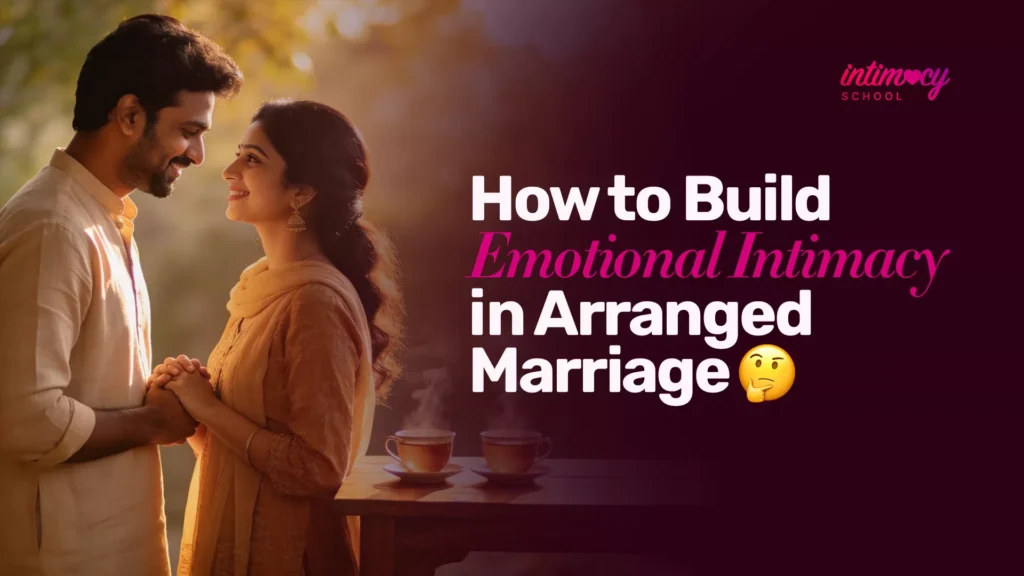
How to build emotional intimacy in an arranged marriage when you barely know each other – practical steps for creating genuine connection from zero familiarity.
Build emotional intimacy in arranged marriage through: daily dedicated conversation time (20-30 minutes minimum) asking deep questions beyond surface topics, sharing vulnerabilities gradually starting small and increasing as safety develops, creating shared experiences that build common memories, maintaining non-sexual physical touch signaling affection without pressure, expressing appreciation specifically and frequently, and accepting that intimacy builds over months not days. Research shows arranged marriage couples who invest in intentional emotional connection during first 3-6 months develop intimacy levels matching or exceeding love marriages by year two. The key difference is intentionality – love marriages build intimacy gradually through dating; arranged marriages require concentrated deliberate effort in compressed timeline.
Introduction
You married someone you barely know. Maybe you met 3-5 times before the wedding. Maybe just once or twice. Now you’re expected to build a life together, share a bed, and somehow develop the deep connection that love-married couples spent years creating through dating.
Building emotional intimacy in an arranged marriage feels impossible because you’re starting from zero. No shared history. No inside jokes. No comfort with each other’s moods, habits, or emotional patterns. Just two strangers living together, hoping a connection develops naturally.
Here’s what successful arranged marriage couples discover: emotional intimacy doesn’t happen naturally just because you live together and have sex. It requires intentional daily investment in knowing each other, sharing vulnerabilities, creating experiences together, and building the trust that makes genuine closeness possible.
This complete guide shows you exactly how to build emotional intimacy in an arranged marriage – providing specific actions, conversation approaches, and timeline expectations for creating a genuine connection when starting from complete unfamiliarity.
Understanding emotional intimacy in the arranged marriage context
What emotional intimacy actually means
Emotional intimacy is feeling genuinely known, understood, and accepted by your partner. It’s the comfort of sharing your real thoughts and feelings without fear of judgment. It’s knowing your partner’s inner world — their fears, dreams, values, and what makes them who they are beyond surface behavior.
What emotional intimacy is NOT:
Living together, having sex, or completing daily routines side by side. These activities can exist without any emotional intimacy. Many couples coexist for years without ever developing genuine emotional closeness.
Emotional intimacy requires active knowing and being known, not just physical proximity.
Why arranged marriages struggle with this specifically
Love marriages build intimacy through extended dating:
Months or years of conversations, shared experiences, seeing each other in various situations, meeting each other’s friends and family, navigating conflicts — all before marriage. Wedding day celebrates already-built intimacy.
Arranged marriages compress this timeline:
You’re expected to live together immediately, be physically intimate quickly, and develop emotional closeness while simultaneously managing enormous life changes. No gradual building period. Just immediate full integration.
This compression creates unique pressure. You’re performing intimacy (living together, sex, presenting as a couple to family) before genuine emotional intimacy exists. The performance can substitute for actual connection if you’re not intentional about building the foundation.
The good news research reveals
Studies comparing arranged marriages to love marriages find that well-functioning arranged marriages reach intimacy levels matching love marriages within 18-24 months. Some arranged marriage couples report deeper intimacy than love marriages because the intentional effort required creates a stronger foundation than gradual drift into familiarity.
The key factor isn’t starting point – it’s whether couples actively invest in knowing each other or assume intimacy develops automatically.
Month 1-3: Foundation building phase
Week 1-2: Structured daily conversation time
Non-negotiable practice:
20-30 minutes daily of focused conversation with no phones, TV, or other distractions. Preferably same time daily, creating routine expectation.
What to talk about:
Move beyond “how was your day” surface questions. Use these deeper prompts:
- “What’s your earliest happy memory?”
- “What were you like as a teenager?”
- “What’s something you’ve always wanted to learn?”
- “What makes you feel most like yourself?”
- “What does a perfect day look like for you?”
These questions build knowledge about who your partner is beyond their daily role as your spouse.
Why this timing matters:
First 2 weeks set patterns for your entire marriage. Making daily conversation routine from day one establishes it as normal rather than special occasion requiring scheduling.
Week 3-4: Sharing minor vulnerabilities
What this looks like:
After 2-3 weeks of general conversation establishing basic safety, begin sharing small vulnerabilities testing how he/she responds:
- “I’m actually nervous about meeting your extended family this weekend.”
- “I felt awkward when your mother criticized my cooking yesterday.”
- “I’m not confident about my new job starting next month.”
Why start small:
Sharing massive trauma or deep fears week 3 overwhelms before safety exists. Small vulnerabilities — current anxieties, minor insecurities, daily concerns — test responsiveness without risking too much.
Positive response indicators:
- Listening without immediately offering solutions
- Expressing empathy or understanding
- Asking follow-up questions showing interest
- Sharing own similar vulnerability in return
Concerning response indicators:
- Dismissing your feelings (“That’s nothing to worry about”)
- Using vulnerability against you later
- Sharing what you said with others without permission
- Making jokes at your expense
Responses to early vulnerabilities predict whether deeper sharing is safe. Positive responses encourage deeper sharing. Negative responses require conversation about what you need from emotional sharing before going deeper.
Our guide on talking openly about intimacy provides foundational communication skills supporting vulnerable sharing.
Week 5-8: Creating shared experiences
Why shared experiences matter:
You can’t rely on shared history — you have none. Creating new experiences together builds the common memories forming foundation for inside jokes, shared references, and feeling like you have history together.
Specific activities creating connection:
Cooking together: Choose new recipe neither of you have made. Figure it out together. Shared problem-solving creates bonding.
Taking walks: Daily evening walks enable conversation while doing something together. Physical activity while talking often produces deeper conversation than sitting face-to-face.
Trying new restaurant: Shared sensory experience of new food creates memory together. Discussing what you like/dislike reveals preferences.
Watching series together: Committing to series you watch only together creates shared experience and regular structured time together. Discussing episodes reveals values and perspectives.
Weekend trips: Even simple overnight trips create memories and show how you handle new situations together.
The key principle:
Do new things together rather than just existing side by side doing routine activities. New experiences create memories becoming your shared history.
Week 9-12: Establishing appreciation habits
Daily appreciation practice:
Express specific appreciation for something your spouse did or quality they demonstrated:
- “Thank you for making coffee exactly how I like it.”
- “I appreciate how patient you were with my family today.”
- “I’m grateful you thought to pick up that thing I mentioned.”
Why specific matters:
Generic “thank you” or “you’re great” provides minimal impact. Specific appreciation proves you notice details showing genuine attention.
Reciprocal pattern:
When both partners practice daily appreciation, it creates positive feedback loop where each person feels seen and valued, creating safety for deeper intimacy.
Our guide on making your wife feel desired daily covers appreciation as component of overall desire expression applicable to both partners.
Month 4-6: Deepening phase
Sharing deeper vulnerabilities and fears
After 3 months of building safety through daily conversation, minor vulnerability sharing, and positive experiences together, readiness for deeper emotional sharing typically develops.
Deeper vulnerabilities to share:
- Past hurts or disappointments
- Current fears about marriage or future
- Insecurities about self or relationship
- Dreams or hopes that feel risky to voice
- Concerns about family dynamics
- Worries about compatibility
How to share:
“There’s something I want to share with you. It feels vulnerable to talk about, but I want you to know this about me…”
Then share the specific vulnerability.
“How does hearing that make you feel?” Inviting their response creates dialogue rather than monologue.
Creating safety for reciprocal sharing:
When your spouse shares vulnerability with you:
- Listen completely without interrupting
- Express appreciation for trusting you: “Thank you for sharing that with me”
- Ask clarifying questions if needed but don’t interrogate
- Share related vulnerability of your own if natural
- Never use shared vulnerability against them later
Building pattern of safe vulnerability exchange creates deep intimacy faster than anything else.
Discussing difficult topics together
Topics arranged marriage couples often avoid:
- Sexual compatibility and satisfaction
- Family boundary issues
- Financial management approaches
- Future plans (children, careers, living situations)
- Religious or value differences
- Concerns about each other’s habits or behaviors
Why avoidance prevents intimacy:
Unspoken concerns create emotional distance. You can’t feel close to someone you’re hiding significant thoughts from.
How to approach difficult topics:
“I want to talk about something that’s been on my mind. It feels hard to bring up, but I think it’s important for us.”
State the topic clearly and your specific concern.
“How do you see this? I want to understand your perspective.”
Listen to their view. Share yours. Find common ground or agree to disagree while understanding each other’s position.
Navigating difficult conversations without avoidance or conflict builds intimacy through demonstrated ability to handle hard things together.
Developing shared rituals and routines
Why rituals matter:
Rituals create predictable moments of connection. They become “yours” — unique to your relationship creating sense of shared identity.
Examples of bonding rituals:
Morning coffee together: Even 10 minutes before starting separate days creates consistent touchpoint.
Evening decompression: First 20 minutes after reuniting focused on each other before handling household tasks.
Weekend morning routine: Breakfast together, reading, or specific activity you do every weekend.
Monthly date or special time: Dedicated couple time that’s protected from other obligations.
The power of “our thing”:
When you can say “we always do X” or “that’s our thing,” you’re building shared identity moving from “two individuals living together” toward “us as a couple.”
Month 7-12: Integration phase
Navigating first conflicts constructively
Why conflicts matter for intimacy:
How you handle disagreements determines whether intimacy deepens or erodes. Couples who navigate conflict constructively report stronger intimacy than couples who avoid conflict entirely.
Constructive conflict approach:
During disagreement:
- Stick to specific current issue, don’t bring up past grievances
- Use “I feel” statements rather than “You always/never”
- Take breaks if conversation gets too heated
- Remember you’re partners solving problem together, not opponents fighting
After disagreement:
- Discuss how the conflict went: “How did you feel about how we handled that?”
- Repair hurt feelings: “I’m sorry I raised my voice. That wasn’t fair.”
- Appreciate what went well: “I’m glad we could talk about this even though it was hard.”
Our complete guide on reconnecting after fights provides detailed conflict recovery strategies.
Discussing your relationship’s emotional state
Meta-conversation about intimacy:
“How do you feel about where we are as a couple?” “Do you feel close to me? Is there anything that would help you feel closer?” “What’s working well for us? What could be better?”
These conversations about your relationship itself — not just about daily logistics — demonstrate investment in emotional quality not just practical functioning.
Quarterly intimacy check-ins:
Every 3 months, dedicated conversation assessing emotional intimacy state. Not waiting until crisis to discuss relationship quality.
Integrating your individual lives into shared life
Moving from parallel coexistence to integrated partnership:
Parallel coexistence:
- Separate friend groups never integrated
- Individual hobbies never shared
- Separate relationships with own families
- Minimal emotional sharing about daily experiences
Integrated partnership:
- Introducing friends to each other, creating couple friendships
- Sharing hobbies sometimes or attending each other’s activities
- Joint relationships with both families
- Daily sharing of emotional experiences not just logistics
Integration doesn’t mean losing individuality. It means deliberately including partner in various aspects of life rather than maintaining completely separate spheres.
Ongoing practices maintaining emotional intimacy
Practice 1: Continuing deep conversations
Intimacy requires ongoing maintenance. The daily conversation practice from month 1 should continue indefinitely, though topics naturally evolve from “getting to know you” to “continuing to know you as you change.”
Evolving question examples:
- “How has your perspective on X changed since we got married?”
- “What are you thinking about lately?”
- “What do you need from me right now?”
- “What’s bringing you joy these days?”
Practice 2: Regular vulnerability sharing
Emotional intimacy deepens through continued vulnerability, not just initial sharing. As life changes, new fears and hopes emerge. Sharing these ongoing vulnerabilities maintains closeness.
When to share:
- Starting new job: “I’m nervous about this”
- Family conflict: “I’m struggling with…”
- Personal insecurity: “I’ve been feeling…”
- Future anxiety: “I’m worried about…”
Practice 3: Prioritizing couple time
As marriage extends beyond first year, other priorities (work, children, extended family) often consume time that initially went to each other. Deliberate protection of couple time prevents slow erosion of intimacy.
Non-negotiable couple time:
- 20 minutes daily conversation (maintained from month 1)
- Weekly dedicated couple activity (date, walk, longer conversation)
- Monthly special time (half day or full day focused entirely on each other)
Practice 4: Expressing appreciation continuously
Initial novelty of marriage creates natural appreciation. Long-term intimacy requires continuing to notice and express appreciation even when partner’s positive qualities become familiar.
Daily appreciation maintenance:
One specific thing you appreciate about partner or something they did. Every single day. This prevents taking each other for granted.
Common emotional intimacy obstacles in arranged marriage
Obstacle 1: Joint family interference
Living with or near joint family often prevents private emotional conversations and creates competing loyalty demands.
Solution:
Establish clear couple privacy — locked bedroom, dedicated couple time, boundaries with family about when you’re available versus when you’re having couple time.
Our guide on privacy in joint family addresses this challenge comprehensively.
Obstacle 2: Assuming intimacy develops automatically
Many couples assume emotional closeness will naturally develop through living together and having sex. It doesn’t. Intimacy requires active building.
Solution:
Make emotional connection as much a priority as physical intimacy. Schedule it, protect it, invest in it deliberately.
Obstacle 3: Cultural messaging that emotional expression is weakness
Many Indian men are taught emotional expression is unmanly. Many Indian women are taught not to burden husband with feelings.
Solution:
Recognize these messages as learned conditioning, not truth. Real strength is emotional honesty. Real partnership is mutual support.
If one partner struggles with emotional expression despite desire to connect, couples counseling can help break through cultural conditioning.
Obstacle 4: Using sex as substitute for emotional intimacy
Physical intimacy is easier than emotional vulnerability for many couples. Defaulting to sex when emotional distance exists prevents addressing actual disconnection.
Solution:
Recognize when physical connection is masking emotional distance. Address emotional needs directly rather than hoping sex will create closeness it requires rather than generates.
For understanding how emotional and physical intimacy integrate, our guide on satisfying your wife covers the interaction between emotional and physical satisfaction.
Timeline expectations: what’s normal
Months 1-3: Still feeling like strangers
Normal if you’re gradually learning about each other. Concerning if you’re avoiding conversation and existing in parallel.
Expected progress:
- Daily conversation feels more natural
- Learning basic facts about each other
- Some inside jokes beginning
- Physical proximity feeling more comfortable
Months 4-6: Beginning to feel like partners
Expected progress:
- Sharing deeper thoughts and feelings
- Handling some conflicts without major drama
- Feeling more comfortable being yourself around partner
- Mutual support developing
Months 7-12: Genuine connection developing
Expected progress:
- Feeling genuinely close much of the time
- Trusting partner with vulnerabilities
- Enjoying spending time together beyond obligation
- Shared identity as couple forming
Year 2+: Deep intimacy comparable to love marriages
Expected outcome:
Research shows well-functioning arranged marriages reach intimacy levels matching love marriages by this point. The intentional effort accelerates what love marriages built gradually.
FAQs
How long does it take to build emotional intimacy in arranged marriage?
Most couples report feeling genuinely emotionally connected within 6-12 months of consistent intentional effort. Some couples achieve this faster (4-6 months), others take longer (12-18 months). Timeline depends on: frequency and quality of emotional conversations, willingness of both partners to be vulnerable, absence of major ongoing conflicts, and whether you’re building connection or just coexisting. Couples who invest 20-30 minutes daily in genuine conversation typically build intimacy fastest.
Can emotional intimacy develop in arranged marriage without love?
Yes. Emotional intimacy is feeling known, understood, and accepted — this can develop before or without romantic love. Many arranged marriage couples report building deep emotional intimacy first, then love developing from that foundation. Others maintain strong intimacy alongside affection and partnership without intense romantic love. Both patterns create successful marriages. Intimacy doesn’t require romantic love, though it often enables love to grow.
What if my spouse isn’t interested in building emotional intimacy?
Some people resist emotional vulnerability due to past hurt, cultural conditioning, or personality differences. Start with small requests: “Can we spend 15 minutes talking each evening?” If consistent refusal despite gentle requests, this may indicate deeper issue requiring counseling. However, many people who initially resist become more open once they experience safety of genuine connection. Give it time and consistent gentle invitation before concluding they’re fundamentally unwilling.
Is it normal to not feel close to arranged marriage spouse after 6 months?
Depends on effort invested. If you’ve actively tried daily conversation, vulnerability sharing, and creating experiences together for 6 months with no increased closeness, this suggests either: lack of compatibility requiring counseling to address, one or both partners not genuinely engaging with emotional sharing, or unresolved conflicts preventing intimacy. However, if effort has been minimal or inconsistent, 6 months of passive coexistence naturally produces minimal intimacy.
How to build emotional intimacy when we have nothing in common?
Common interests aren’t required for emotional intimacy. Emotional intimacy comes from knowing each other’s inner worlds — feelings, values, fears, dreams — not from sharing hobbies. However, creating new shared experiences together builds common ground. Try new activities neither has done before, making them “yours together.” The process of exploring together creates connection even when starting interests differ completely.
What if emotional intimacy isn’t developing but physical intimacy is fine?
This is common pattern where physical connection feels easier than emotional vulnerability. However, physical intimacy without emotional foundation often becomes routine and disconnected over time. Address by: reducing frequency of physical intimacy temporarily while focusing on emotional connection, having explicit conversation about needing emotional closeness, and establishing daily non-sexual time for conversation and vulnerability sharing. Physical intimacy improves significantly once emotional foundation exists.
Conclusion
Building emotional intimacy in arranged marriage requires intentional daily investment that love marriages make gradually through dating. The compression of timeline doesn’t make it impossible — it makes it urgent and necessary to be deliberate rather than hoping connection develops automatically.
Start this week with one practice: 20 minutes of daily focused conversation using deeper questions beyond “how was your day.” This single habit, maintained consistently, builds foundation for everything else.
Your arranged marriage can develop emotional intimacy matching or exceeding love marriages — but only if you actively build it. Start building today.